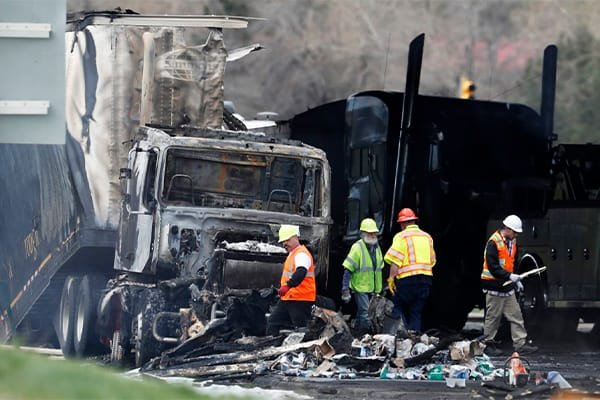
People sometimes assume a truck crash is handled the same way as a car crash, just with a larger vehicle. In reality these are different cases, and the differences matter from day one.
More parties can be responsible
In a typical car crash there are two drivers. In a truck case, responsibility may be shared among the driver, the trucking company, the owner of the trailer, the company that loaded the cargo, and even a maintenance contractor. Each may carry its own insurance, and sorting out who is responsible for what is part of the work.
The evidence is on a timer
Modern commercial trucks record how they were driven — electronic logging devices, engine data, GPS, and often dash cameras. Carriers also keep driver-qualification files and hours-of-service logs. Some of this material can be destroyed in the ordinary course of business unless someone formally demands it be preserved. Acting quickly to send that demand can make or break a case.
Why speed matters
Commercial carriers frequently have investigators working a serious crash within hours. That is not sinister — it is their job — but it means the injured person benefits from having someone moving just as fast to preserve the facts on their side.